
Recoating a garage floor makes sense when the existing coating has worn from traffic but is still firmly bonded to the concrete. A surface recoat costs $4 to $7 per square foot. If the coating is peeling, bubbling, or lifting anywhere, the bond has failed and the entire floor needs to be ground down to bare concrete before any new system goes on. A new coating typically costs $6 to $12 per square foot installed. Armor Coating Co. tests the adhesion on every garage floor project before recommending a recoat or full removal.
Most homeowners assume the coating itself failed, but the problem almost always starts underneath the surface. Moisture, inadequate prep, or contaminants between layers cause delamination that no new topcoat can fix. This article explain how to tell whether your floor needs a light recoat or a full grind-and-replace, and why applying new material over failing adhesion guarantees a second failure within months.
Signs Your Garage Floor Coating Has Failed
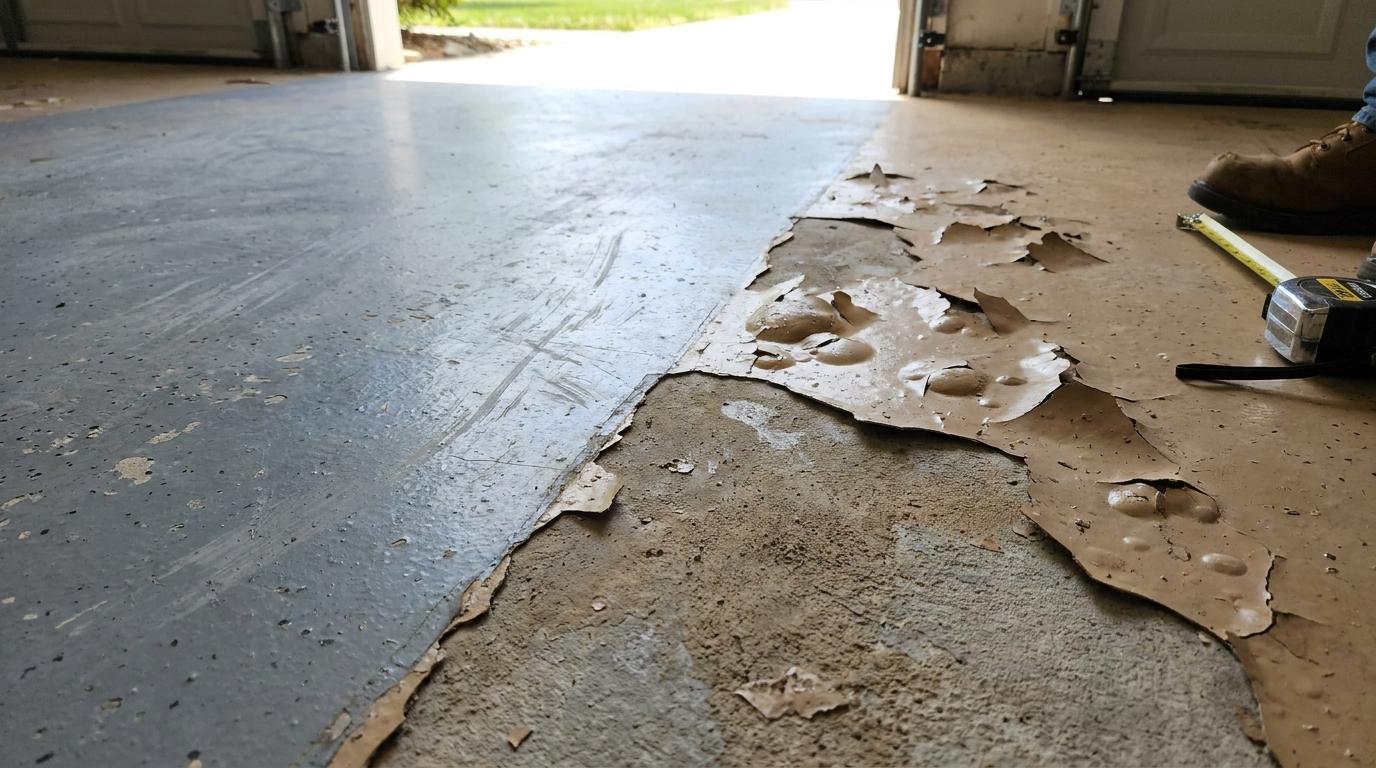
Surface wear and coating failure look different. Knowing which one you have determines whether a recoat is worth the money.
Fading, light scuffing, and dullness in high-traffic lanes are surface wear. The coating is still bonded to the concrete, and a professional recoat can restore the finish without removing the existing material.
Peeling, bubbling, flaking, and edges pulling away from the slab are adhesion failures. The coating has separated from the concrete, and any new material applied over it inherits the same weak bond. Soft spots that flex under pressure indicate moisture pushing up from underneath.
In Eau Claire, WI and the surrounding communities, freeze-thaw cycles and spring moisture are the two most common triggers for adhesion failure in garage floor coatings. A floor that looked fine in October can show bubbling by April.
When Recoating Works and When It Does Not
When a Recoat Is the Right Call
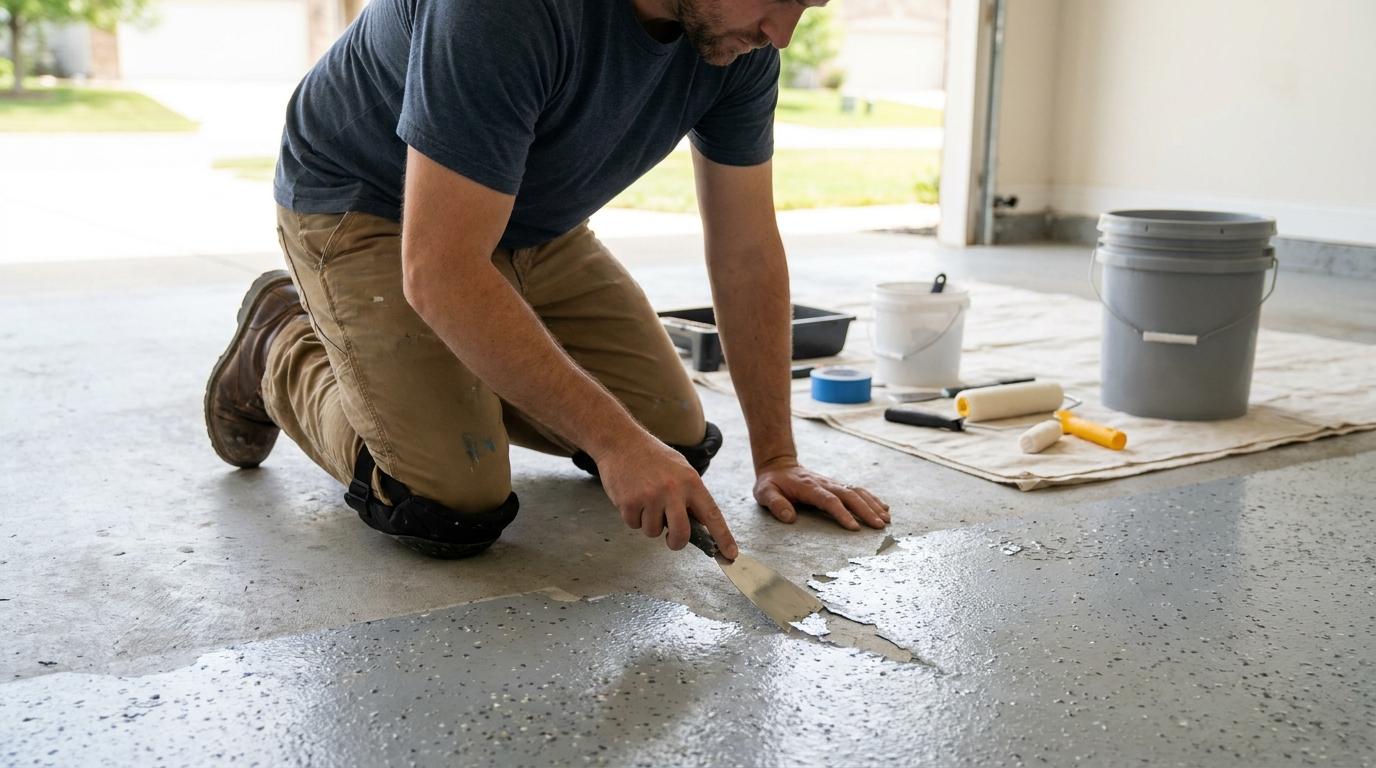
A recoat makes sense when the existing coating has worn through from traffic but is still firmly bonded everywhere else. The floor gets a light sand, a cleaning pass, and a new topcoat. This approach costs $4 to $7 per square foot and adds years to the service life without starting from scratch.
When Full Removal Is Necessary
A recoat fails when adhesion has already failed. If the old coating lifts, peels, or bubbles anywhere, the bond line is compromised. Applying new material over a detached layer gives you two coats that peel instead of one. The only reliable fix is full removal: diamond grinding strips the slab back to bare concrete, and a new system goes down on a clean profile.
The most common mistake is spot-patching peeled areas and recoating over the rest. The patches bond to fresh concrete, but the recoat over intact-looking areas bonds to old material that may be weeks from lifting. Professional epoxy removal and full concrete prep eliminates the risk of a second failure.
What a Professional Recoat Involves
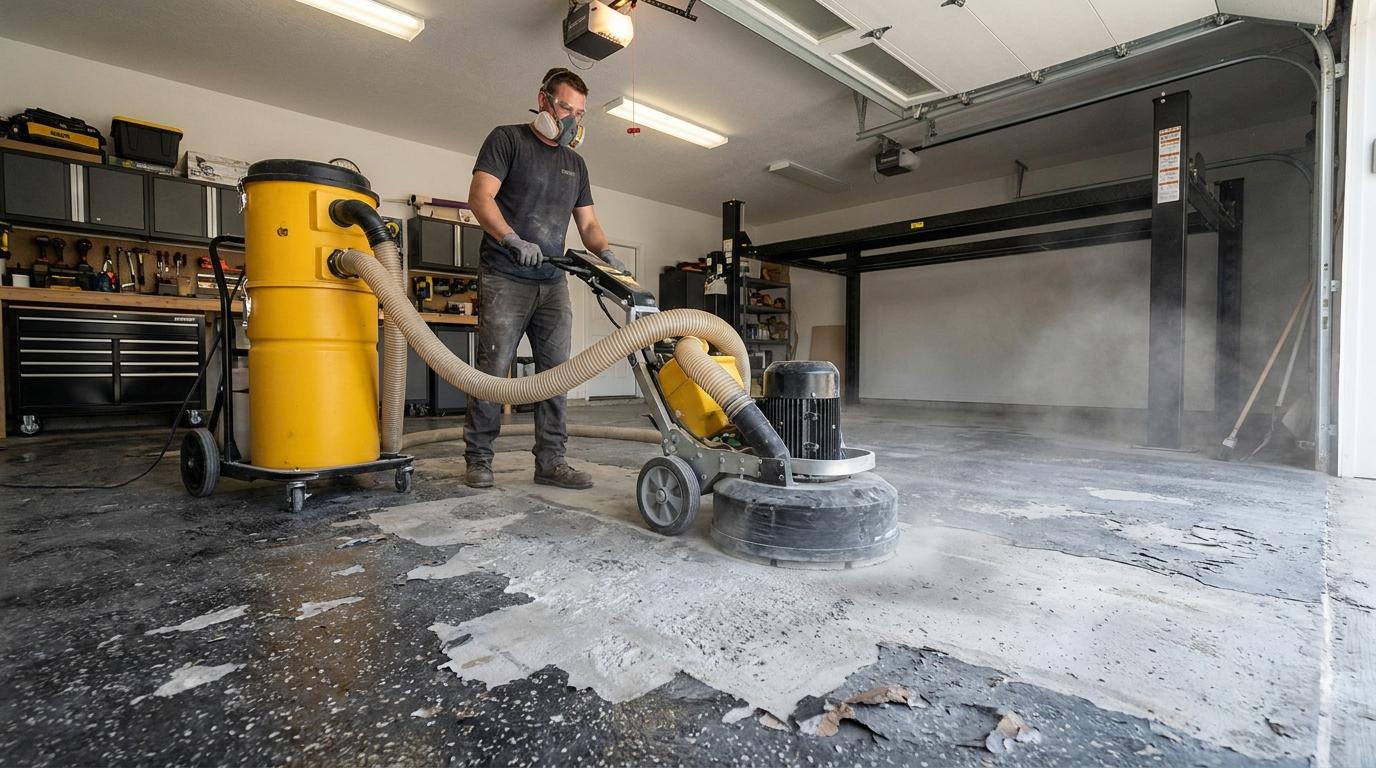
Whether the floor needs a surface recoat or full removal, the process follows the same discipline as a new installation.
For surface recoats, the existing coating gets screened with a floor buffer to create tooth for the new layer. Any bare spots are feathered and blended. A new polyurea base and polyaspartic topcoat go down over the prepared surface, and the floor is walkable in four to six hours.
For full removal, diamond grinding strips every trace of the old coating, filler, and sealer. Cracks and salt pits get repaired, moisture is tested, and the new system goes down on bare concrete. This is the same garage floor resurfacing process for pitted slabs that works whether the damage comes from a failed coating or years of freeze-thaw damage.
Frequently Asked Questions
How much does it cost to recoat a garage floor?
Recoating a garage floor typically costs $4 to $7 per square foot for a surface recoat over a bonded existing coating. Full removal and recoating runs $6 to $12 per square foot because diamond grinding is required. For a standard two-car garage, most projects land between $2,000 and $5,000.
Can you recoat over old epoxy?
You can recoat over old epoxy only if the existing layer is still firmly bonded to the concrete. A light abrasion pass creates enough profile for a new topcoat to grip. If the epoxy is peeling or lifting anywhere, full removal by diamond grinding is the only reliable path forward.
How long does a recoated garage floor last?
A recoated garage floor typically lasts 10 to 15 years when the existing adhesion is sound and the new topcoat is a professional polyurea or polyaspartic system. Armor Coating Co. backs installations with a 15-year warranty. Recoats over failing adhesion rarely last more than a year because the new coating inherits the weak bond underneath.
Stop Patching and Start Over the Right Way
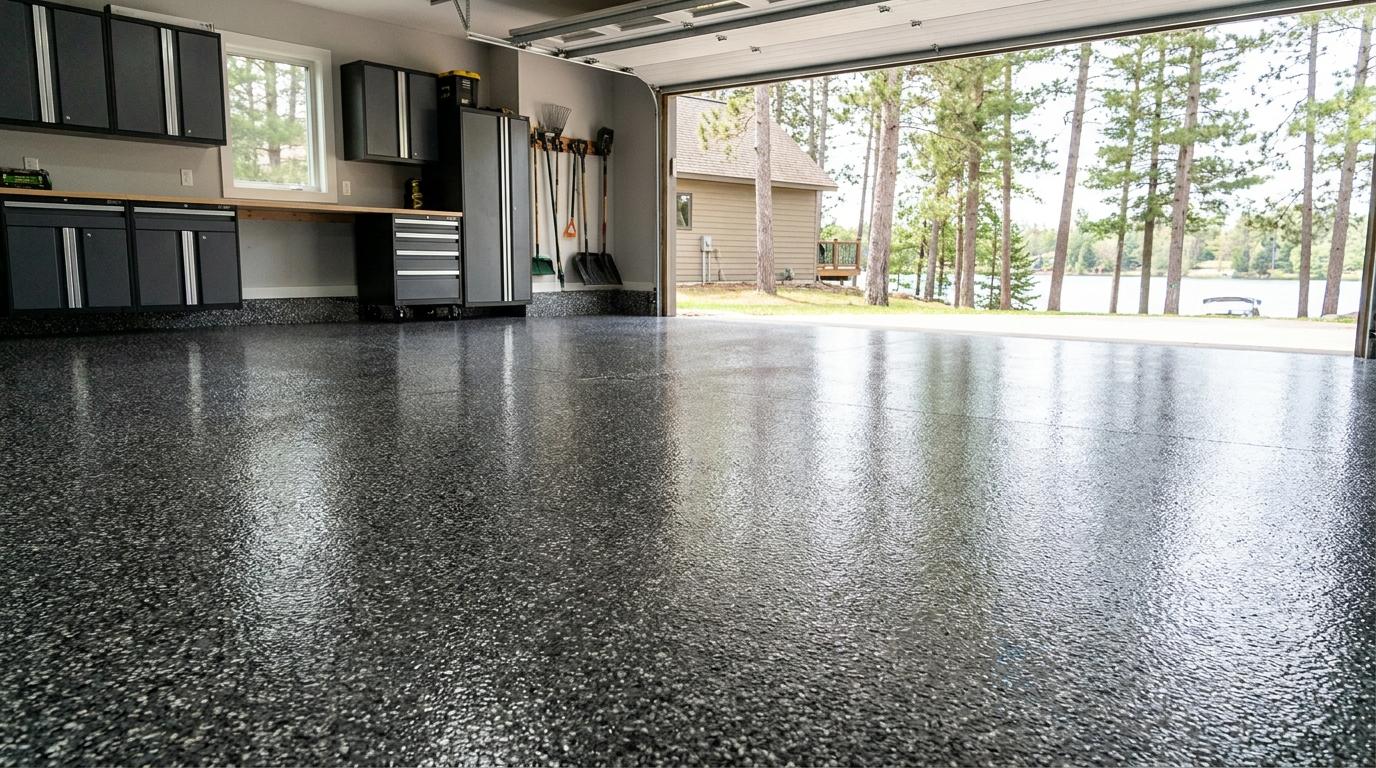
Before deciding between recoating and full removal, take a look at the floor and ask yourself: is the existing coating still bonded to the concrete? If it is, a recoat restores the surface at a fraction of the cost. If it isn’t, every dollar spent recoating is wasted on material that will peel again. Testing adhesion first prevents you from having the job done twice.
Armor Coating Co. installs polyurea and polyaspartic garage floor coatings across Hayward, Rice Lake, Duluth, and the surrounding tri-state area. We always test the coating’s adhesion and explain the necessary prep before any work begins. For a free evaluation of your garage floor coating, contact Armor Coating Co. at (715) 934-9037.

I’m Chad Nicks, owner of Armor Coating Co. My team and I offer high-quality, durable concrete coatings in Duluth, MN, and Northern Wisconsin. With innovative products four times stronger than epoxy, our family-owned business provides lasting solutions for both residential and commercial spaces.
Email: chad@armorcoatingco.com
Facebook: https://www.facebook.com/ArmorCoatingCompany
Instagram: https://www.instagram.com/armorcoatingco/