
Concrete patio resurfacing options fall into three categories: protective coatings, concrete overlays, and acid or water-based stains. Each serves a different purpose. Coatings seal and protect a sound slab. Overlays rebuild a damaged surface. Stains change the color without adding protection. The right option depends on the slab’s condition and the climate it has to survive. Armor Coating Co. installs polyurea and polyaspartic patio coatings across Northern Wisconsin and Minnesota.
Northern Wisconsin gets over 50 inches of snow annually, and spring melt saturates slabs that spent the winter expanding and contracting through freeze-thaw cycles. That combination punishes unprotected patios harder than most regions in the country. The sections that follow compare all three resurfacing methods, explain how Northern Wisconsin weather affects each one, and outline how to match the method to your patio’s actual condition.
How Northern Wisconsin Weather Affects Patio Resurfacing
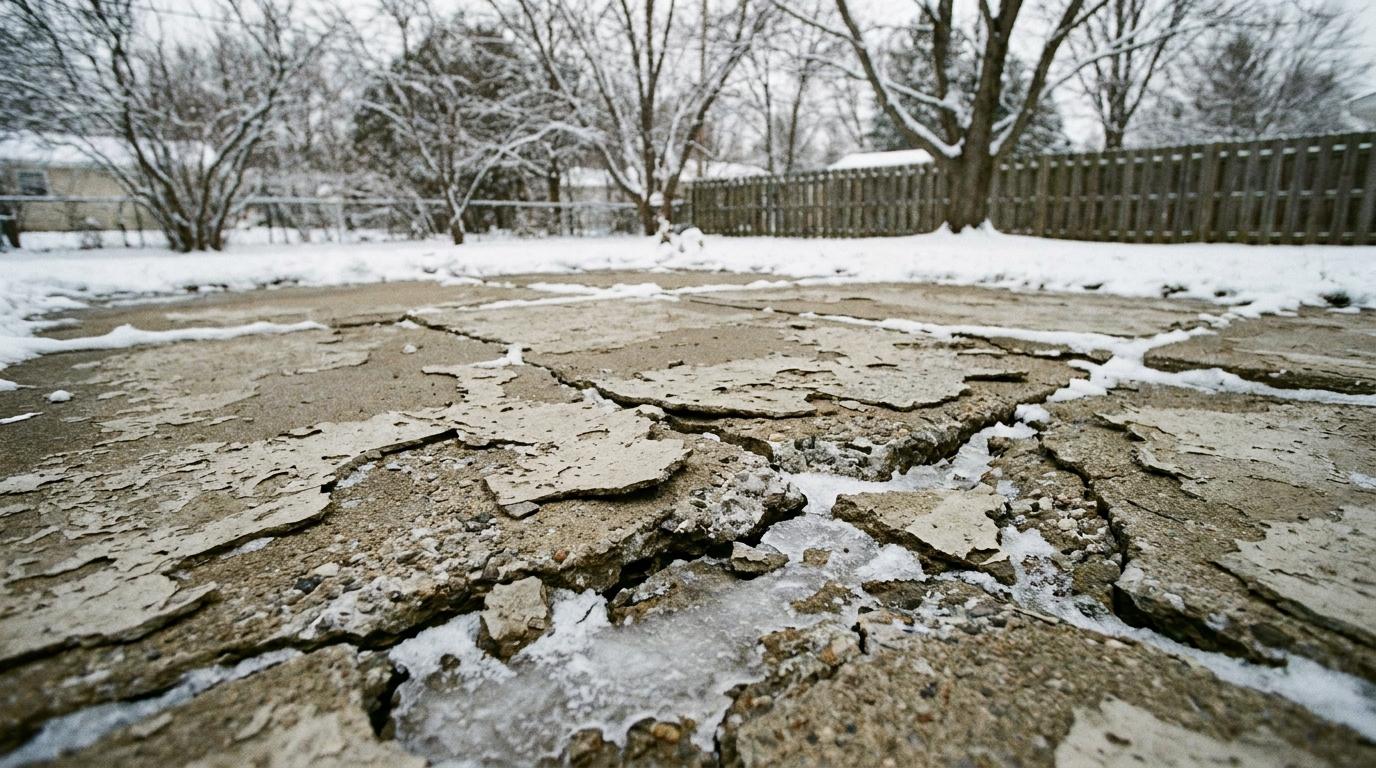
Freeze-thaw cycles are the primary threat to outdoor concrete here. Water enters the surface, freezes, expands by roughly 9%, and cracks the concrete from the inside. Over a winter with dozens of cycles, an unprotected patio develops scaling, spalling, and micro-cracks that grow each season.
Road salt compounds the problem. Salt increases the number of freeze-thaw events and draws additional moisture into the slab. Any resurfacing method applied in this climate needs to block moisture and resist UV from long summer days.
The right option depends on the slab’s condition. Surface wear calls for a coating. Deeper scaling may need an overlay. For patios that have become slippery from wear and weather damage, a coating with a slip-resistant finish solves both the traction problem and the deterioration underneath.
Three Resurfacing Options Compared
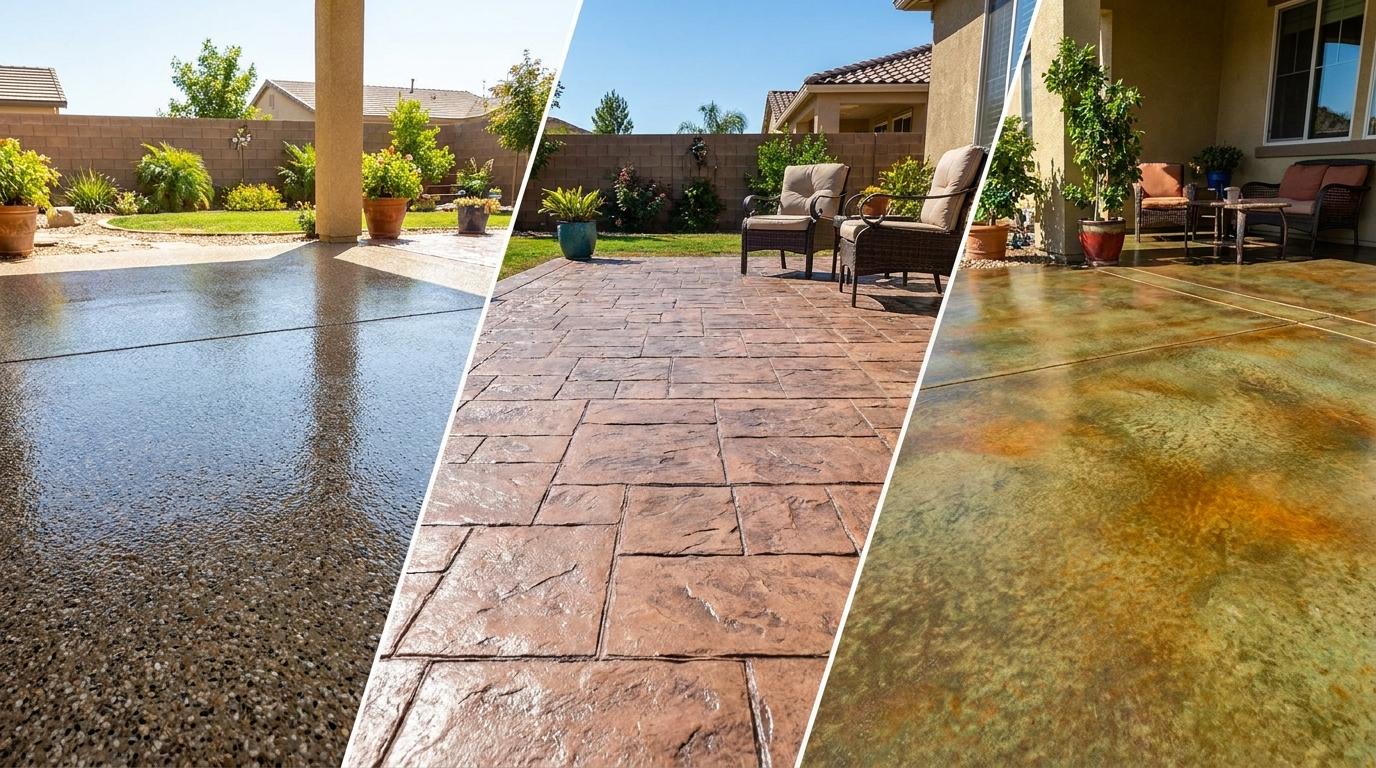
Each method addresses a different level of damage and delivers a different result.
Protective Coatings
Polyurea and polyaspartic coatings seal the surface and block moisture, UV, and chemical damage. Armor Coating Co. installs these systems on patios across the region, including projects in Rice Lake and nearby communities. Installation takes a single day after diamond grinding. Coatings work best on structurally sound patios with minor surface wear and cost $5 to $12 per square foot, backed by a 15-year warranty.
Concrete Overlays
Overlays apply a new layer of polymer-modified concrete over the existing slab, typically 1/4 inch thick. They can be stamped, textured, or colored to mimic stone or brick. Overlays suit patios with surface damage too severe for a coating but still structurally intact, costing $6 to $12 per square foot. Armor Coating Co. does not install overlays. Homeowners considering this option should look for a decorative concrete specialist.
Acid and Water-Based Stains
Stains penetrate the concrete and change its color without adding a protective layer. Acid stains create mottled, natural-looking tones, while water-based options offer more uniform color. Staining costs $5 to $10 per square foot but does not protect against moisture or freeze-thaw. In Northern Wisconsin, staining paired with a protective patio coating that blocks moisture provides both the color change and the durability the surface needs.
How to Choose the Right Option for Your Patio
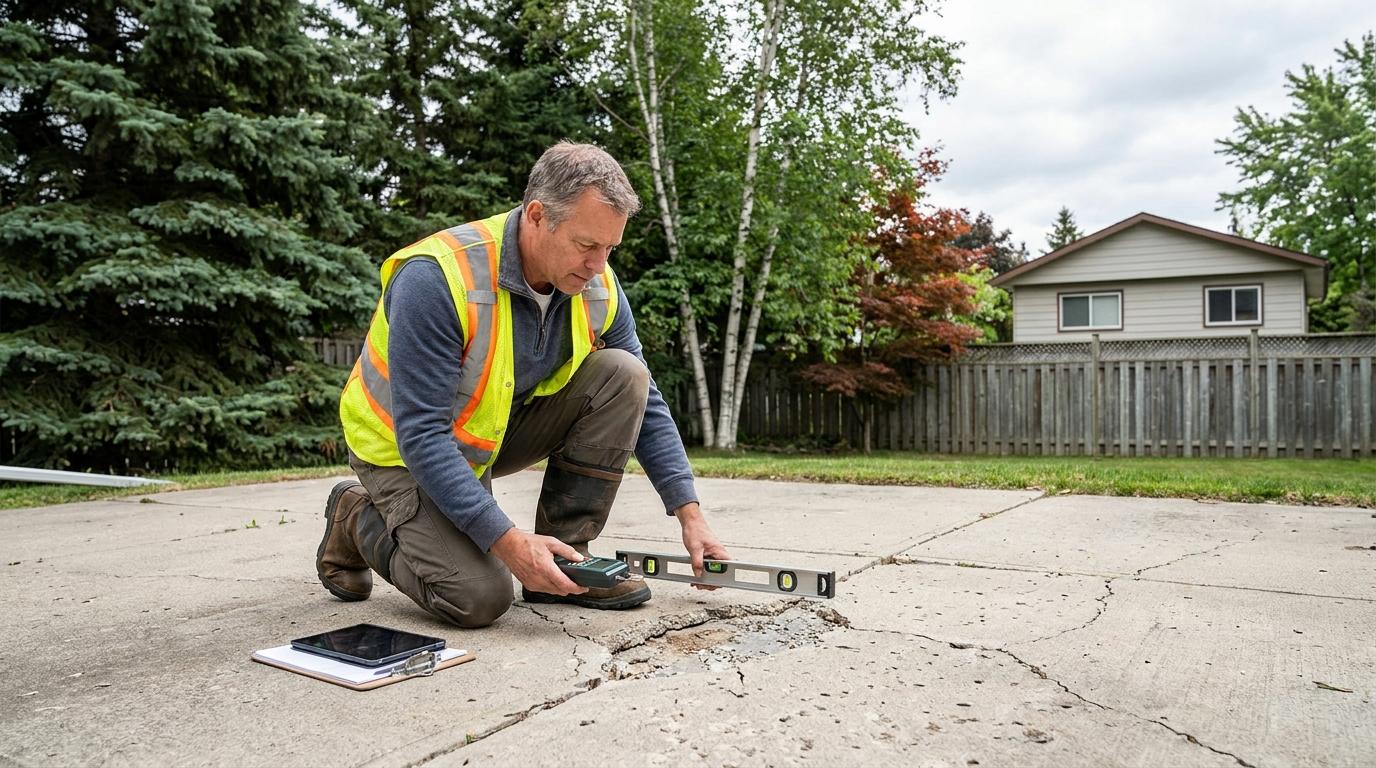
Start with the concrete’s condition. If the surface is sound with only cosmetic issues like discoloration or light scaling, a polyurea and polyaspartic coating provides protection and a finished look in a single step. If damage goes deeper but the slab is still stable, an overlay rebuilds what the weather removed. If the slab has structural cracks or has settled unevenly, resurfacing alone is not enough, and partial replacement may be necessary before any finish goes down.
Climate matters as much as condition. Stains look good on sheltered patios in mild climates, but they offer no moisture protection in regions with hard freeze-thaw winters. A coating or overlay is the safer investment when the slab faces Northern Wisconsin weather year-round.
Frequently Asked Questions
How much does concrete patio resurfacing cost?
Concrete patio resurfacing costs range from $5 to $12 per square foot for a protective coating, $6 to $12 for a concrete overlay, and $5 to $10 for staining. A standard 200-square-foot patio in Northern Wisconsin typically runs $1,000 to $2,400 depending on the method, concrete condition, and level of surface repair needed beforehand.
Can you resurface a cracked concrete patio?
You can resurface a cracked concrete patio if the cracks are surface-level and the slab underneath is structurally sound. Hairline cracks get filled during prep, and the coating or overlay bonds over them. Armor Coating Co. repairs surface cracks and salt pits as part of every patio coating project. Structural cracks wider than a quarter inch typically need repair before any resurfacing.
Does a patio coating make the surface slippery?
A professionally applied patio coating does not make the surface slippery. Polyurea and polyaspartic systems include a slip-resistant finish that provides better traction than bare concrete, especially when wet. The textured flake broadcast adds grip, and the polyaspartic topcoat maintains that texture permanently without wearing smooth.
Match the Method to Your Patio’s Condition
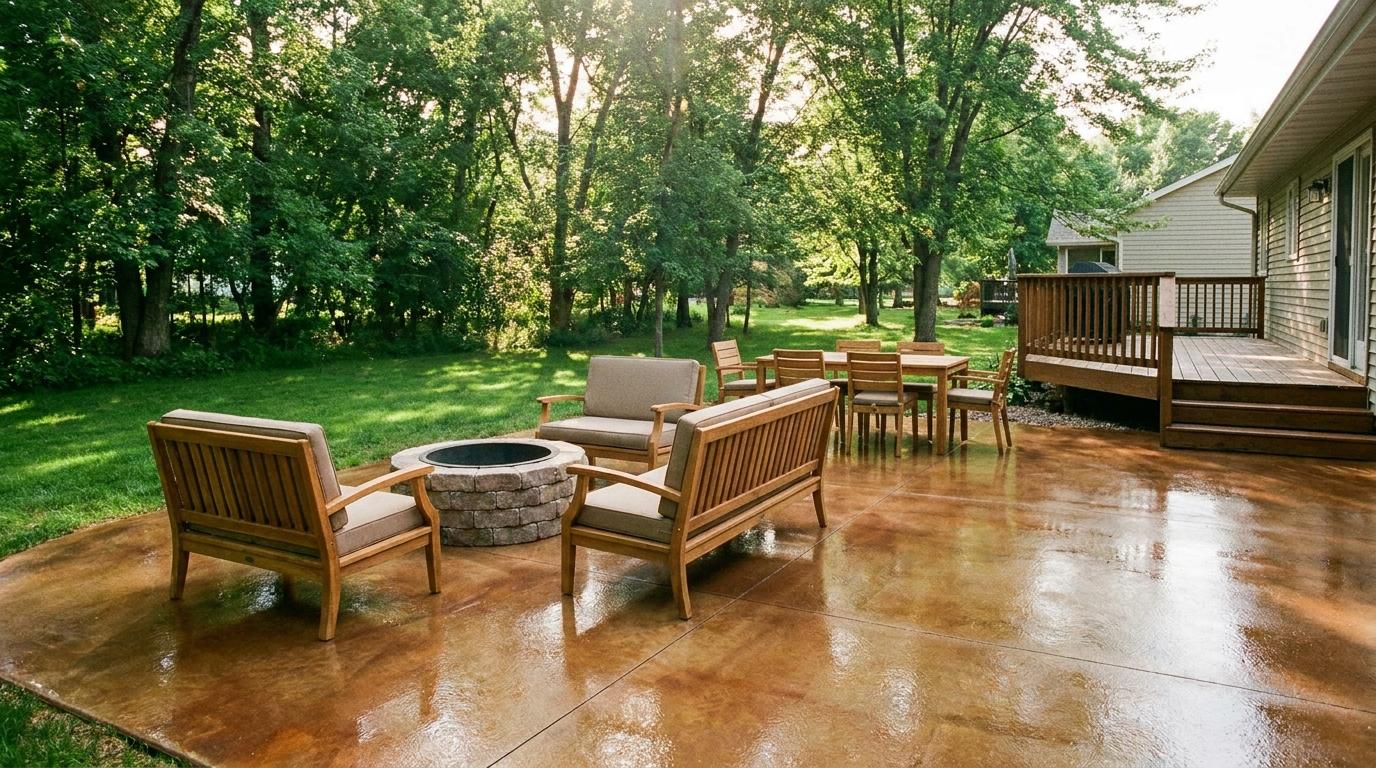
The resurfacing method that lasts matches the solution to the problem. A coating protects and seals a sound slab. An overlay rebuilds a damaged surface. A stain changes the color but adds no protection. In Northern Wisconsin, where freeze-thaw and moisture are constants, protection is the baseline requirement for any patio finish that needs to survive more than a few seasons.
For a free estimate on a patio coating installation, contact Armor Coating Co. today or call (715) 934-9037.

I’m Chad Nicks, owner of Armor Coating Co. My team and I offer high-quality, durable concrete coatings in Duluth, MN, and Northern Wisconsin. With innovative products four times stronger than epoxy, our family-owned business provides lasting solutions for both residential and commercial spaces.
Email: chad@armorcoatingco.com
Facebook: https://www.facebook.com/ArmorCoatingCompany
Instagram: https://www.instagram.com/armorcoatingco/