
When comparing polyaspartic vs epoxy coatings, most people focus on durability and price—but here’s what often matters more in real life: how long you’ll be without your garage or facility.
Polyaspartic coatings can be applied and be ready to receive vehicles in about 24 hours. Epoxy systems typically need 3 to 7 days before you can park on them. That difference matters whether you’re a Duluth homeowner with nowhere else to park or an Eau Claire business that can’t shut down for a week. The installation timeline for polyaspartic vs epoxy often becomes the deciding factor once you understand how each system’s curing chemistry affects your schedule and operations.
Understanding Polyaspartic vs Epoxy Installation Differences
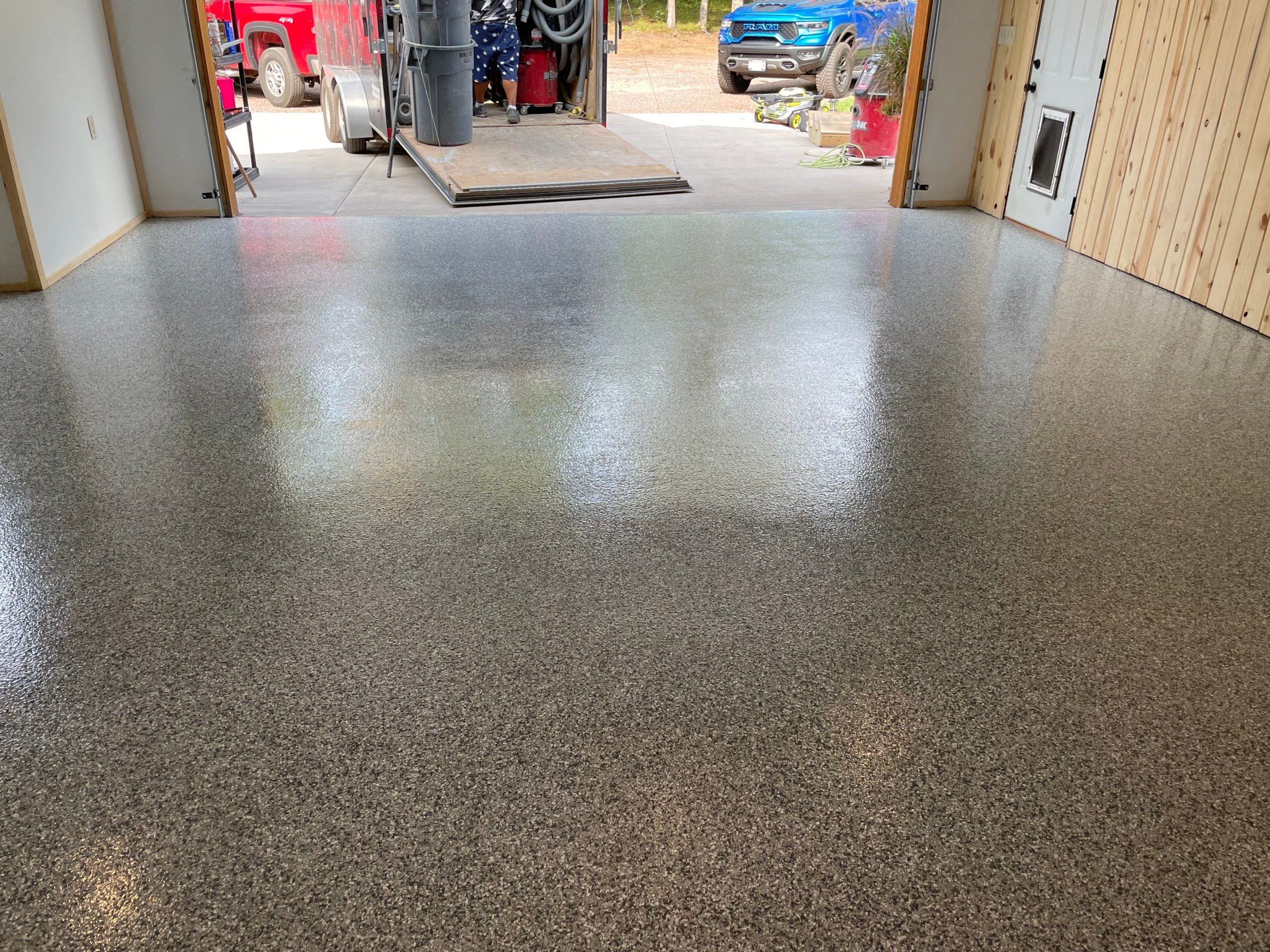
Polyaspartic coatings are typically done in one day, with full use possible within 24 hours. Epoxy systems require 2 to 3 days for installation, plus additional curing days, totaling 5 to 7 days before normal use can resume.
Polyaspartic coatings cure rapidly across a wide temperature range, including cold conditions in Northern Wisconsin. Epoxy systems require warmer temperatures and controlled humidity, making them more temperature-sensitive.
This means polyaspartic garage projects can be finished over a weekend. Businesses can install coatings with minimal operational disruption. In contrast, epoxy projects require arranging alternative parking for nearly a week or scheduling around business closures.
Polyaspartic Installation Process and Timeline

Polyaspartic coatings are known for faster curing, wider temperature tolerances, and single-day application when conditions allow. Armor Coating Co. has completed countless polyaspartic installations that demonstrate these timeline advantages.
Surface Preparation and Application
Surface prep for polyaspartic and epoxy is the same: grinding, repairs, and moisture checks to ensure readiness. The preparation phase remains comparable between systems.
Base and topcoat are typically applied on the same day with polyaspartic systems. Unlike epoxy, which needs overnight curing between coats, polyaspartic’s rapid cure allows complete installation in a single session. Single-day completion is possible depending on the specific system and conditions, with many residential garages finished in 6 to 8 hours.
Curing and Return to Use
Polyaspartic coatings become walkable in 1 to 3 hours. Light to normal use is often allowed within 12 to 24 hours for foot traffic and basic activities. Vehicle traffic is commonly permitted after 24 hours, depending on manufacturer specifications and temperature.
Why it’s faster: Rapid-curing chemistry and lower sensitivity to ambient conditions enable polyaspartic to achieve full strength quickly without requiring precise temperature or humidity.
Epoxy Installation Process and Timeline

Epoxy systems generally require longer installation and curing because each layer must harden before the next is applied.
Multi-Step, Multi-Day Process
Day 1 involves surface prep and primer application with overnight curing required. Day 2 focuses on base coat application, again requiring an overnight cure. Day 3 and beyond involve adding optional decorative flakes and applying the topcoat. Some installations take longer depending on humidity, temperature, and resin type.
Epoxy installation can’t be rushed without compromising results. Each layer needs adequate curing before it’s ready to accept the next coat.
Extended Curing Requirements
Light foot traffic is typically allowed in 12 to 24 hours after the final coat. Heavier traffic or equipment use may require 48 to 72 hours for the coating to handle concentrated loads. Vehicle traffic often requires 3 to 7 days, depending on the product and environment. You need a fully cured coating before parking cars.
Why epoxy takes longer: A slower chemical cure and greater sensitivity to temperature and humidity mean the coating requires more time to reach full strength. Cold temperatures slow curing further, sometimes requiring heated environments during Northern Wisconsin winters.
Comparing Downtime: Which Coating Fits Your Schedule?
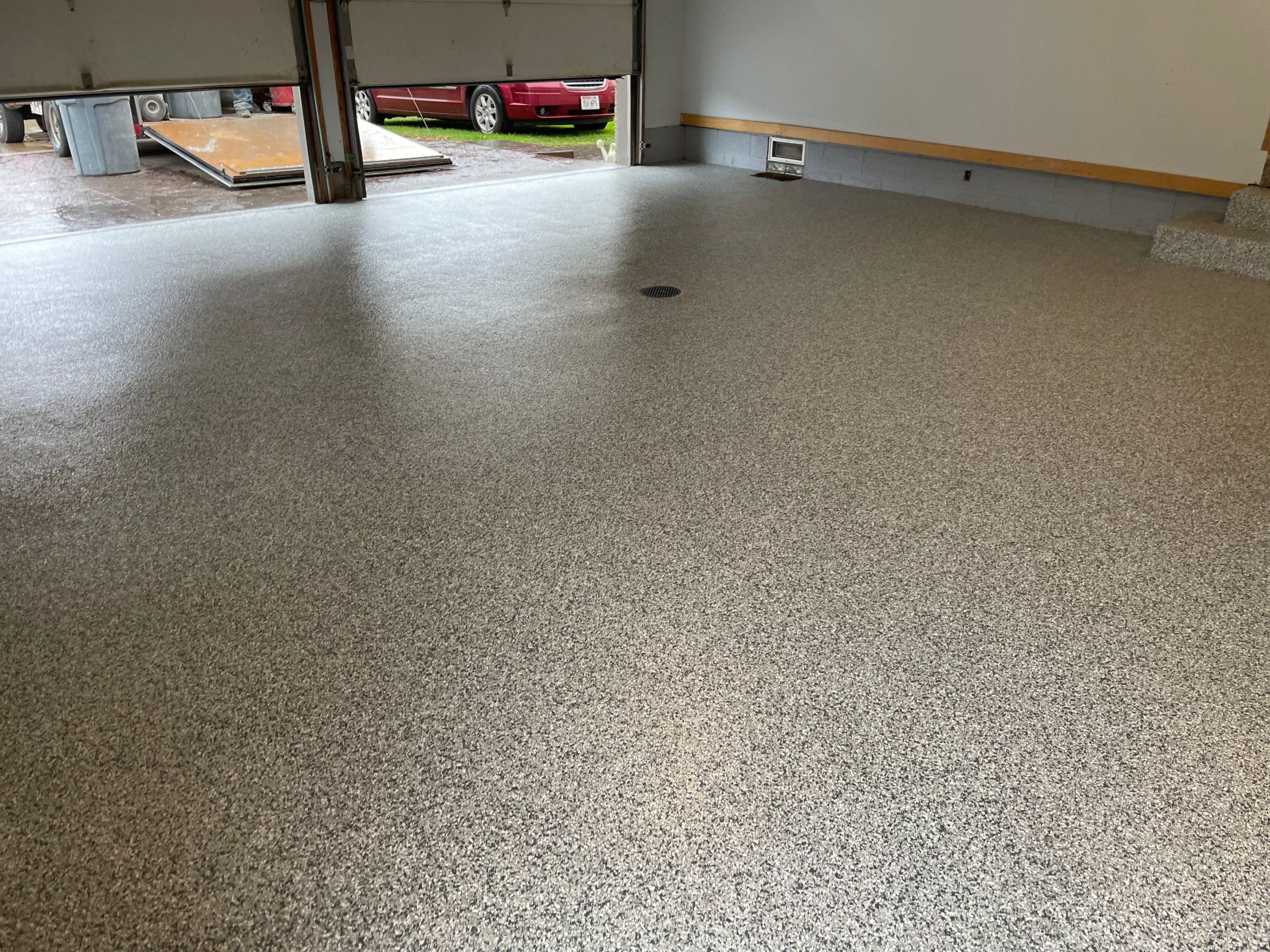
The difference in downtime often determines which system makes sense for you.
- Polyaspartic advantages – One-day installation and 24-hour return to use minimize disruption
- Epoxy considerations – 5-7 day total timeline requires planning for alternative access
- Business impact – Commercial operations may lose significant revenue during epoxy’s
- extended cure
- Seasonal timing – Polyaspartic’s temperature tolerance allows installation when epoxy would fail
- Cost vs. convenience – Epoxy costs less but requires more patience; polyaspartic costs more but gets you back to normal faster
Choose the Right Coating and Timeline for Your Project
The polyaspartic vs epoxy reveals why faster timelines and superior flexibility make polyaspartic the preferred choice for Northern Wisconsin properties. While epoxy’s lower cost might seem attractive, the extended downtime and temperature sensitivity create real challenges in our climate. For businesses that lose revenue during closures or homeowners who can’t park elsewhere for a week, polyaspartic’s rapid installation and extreme weather performance deliver value that exceeds the price difference.
Don’t let installation timeline surprises derail your project. Reach out to Armor Coating Co. to discuss how our industry-leading polyaspartic coatings provide the minimal downtime and superior performance your Northern Wisconsin property deserves.
